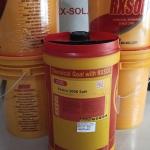

Tank Cleaning Chemicals
Buyer's guide
Tank cleaning chemicals remove the residue of the last cargo or process so a tank can be inspected, repaired or loaded with a different product. The right chemical depends on three things: what the tank held, what it will hold next, and what the tank is made of or coated with. This guide explains the main types, where each one is used and how to order them from Tank Cleaner (RXSOL group, since 1995).
Types of tank cleaning chemicals
| Type | Removes | Typical use | Examples in our range |
|---|---|---|---|
| Alkaline and caustic cleaners | Vegetable oils, animal fats, fatty acids, light oily films | Chemical tankers, food-grade and process tanks, caustic wash tanks | Alkaleen Liquid HD, LAC Alka Liquid HD, Caustic Soda Flakes |
| Solvent and emulsifying cleaners | Crude oil, fuel oil, bitumen, lube oil, wax | Crude and product tankers, bunker and fuel tanks, storage tanks | B Solve, Bunker Cleaner C, Bitumen Remover |
| Neutral pH cleaners | General soiling where the coating or metal is sensitive | Coated tanks, aluminium and mixed-metal tanks | Neutral pH Tank Clean |
| Sludge breakers and demulsifiers | Oil-water emulsions, sludge, slops | Crude tankers, slop tanks, sludge tanks | Emulsion Sludge Breaker, demulsifiers |
| Acid descalers and rust removers | Rust, mill scale, hard-water scale | Ballast and water tanks, stainless steel before passivation | Rust Remover, Metal Bright |
| Passivation chemicals | Free iron on stainless steel after cleaning | Stainless steel cargo and process tanks | Passivation Liquid RX, Citric acid blend |
| Hold cleaners (foaming) | Coal, petcoke, sulphur, fertiliser residues | Bulk carrier cargo holds | AquaaTuff Ship Hold Cleaner |
Choosing a cleaner by tank type
Crude oil tankers
After crude oil washing, waxy and asphaltic residues stay on the bottom and structure. An emulsifying cleaner or sludge breaker, used hot through the fixed washing machines, lifts these residues so they can be pumped to the slop tank. Check MARPOL Annex I limits for discharge of slops.
Product and fuel tankers
Moving from dirty products (fuel oil, gasoil) to clean products needs a solvent or detergent cleaner that removes the oily film completely, followed by a fresh water rinse. Bunker and fuel tanks on board are cleaned the same way during dry dock or repairs.
Chemical tankers
Vegetable oils and fatty acids are removed with an alkaline cleaner at a controlled temperature. Some cargoes polymerise or dry if washed with hot water first, so the order of steps matters. For cargoes under MARPOL Annex II, the prewash rules for the cargo category apply. Most charterers then ask for a wall-wash test (chlorides, hydrocarbons and permanganate time) before the next cargo is loaded.
Storage and process tanks
Shore tanks at terminals, refineries and plants are often cleaned with a caustic or alkaline wash, then descaled and, for stainless steel, passivated. Confined-space entry rules, ventilation and gas testing apply before anyone enters a tank.
Cargo holds
Hold cleaners are foaming products that cling to vertical bulkheads. They are sprayed on, left for the contact time and washed off with sea water, then a fresh water rinse.
How to order
- Send the last cargo, next cargo, tank volume and coating (stainless steel, zinc silicate, epoxy or uncoated).
- We recommend the product, dilution, temperature and method, and send the MSDS and technical data sheet with the quote.
- Choose the pack: 25 L cans, 210 L drums, 1,000 L IBCs, or 25 and 50 kg bags for powders.
- We dispatch from Navi Mumbai to Indian ports and plants. Export orders are packed for sea freight.
Safety notes
Always read the MSDS before use. Wear the protective equipment it lists, keep acids and alkalis apart, and never mix cleaners unless the technical data sheet says so. Test a small area first on coated tanks. Tank entry needs a permit, ventilation and gas testing.
Frequently asked questions
What is the best chemical for cleaning an oil tank?
For heavy oils, an emulsifying solvent cleaner used hot works best. For light oily films, a heavy duty alkaline cleaner is usually enough and is easier to rinse.
Can one cleaner be used for every tank?
No single product is best for every residue. Alkaline cleaners do not remove waxy crude well, and solvent cleaners are not ideal for vegetable oils. Tell us the cargo and we will match the product.
Do you deliver outside India?
Yes. The RXSOL group also supplies from the UAE, and export packing is available on request.